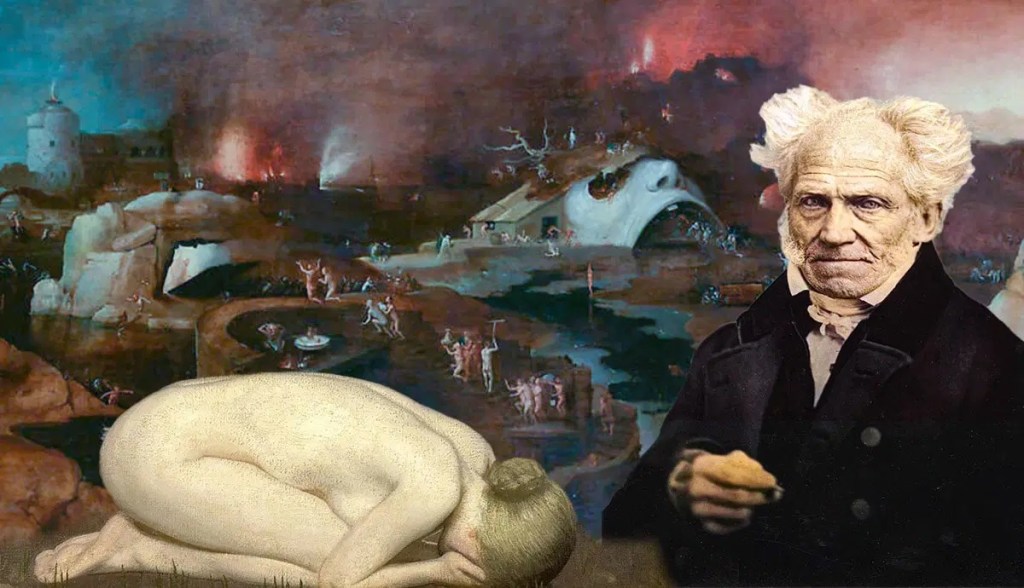
To be human is to navigate existence as a unique being, distinctly inhabiting a singular identity. Within this journey, an enigmatic force seems to propel and shape one’s path—a force commonly referred to as will. The nature of this will, and its role in directing human life, has been the subject of profound exploration, particularly in the works of Arthur Schopenhauer. Schopenhauer conceives of the will as a “Will to Live,” a blind and relentless force that drives individuals toward survival, often at the cost of inevitable suffering, and is at the root of all action. Although the will interweaves every action in life, it is most enlightening to observe its role in ethically dubious settings. Of these, few are more controversially debated than euthanasia. The practice of euthanasia, or “good death,” is defined as a patient voluntarily requesting to be killed by a doctor. Most definitions include a population made up of those who are dying or have a condition that is progressively getting worse and cannot be cured. Euthanasia definitionally divides into “active” and “passive” euthanasia, where the former includes the deliberate administration of a procedure or substance with the intent of causing death, and the latter refers to the withdrawal or withholding of life-sustaining treatment. Argument has recently resurfaced as to how Schopenhauer views the act of voluntarily choosing death; however, most debates focus on the act of suicide. As I will later show, the view Schopenhauer held for suicide is not applicable to euthanasia as it is understood today. Nonetheless, it remains important to interpret euthanasia through Schopenhauerian philosophy, as his ethical framework continues to impact social beliefs in ways which may unintentionally influence a person’s view of euthanasia. I will further demonstrate Schopenhauer provides a conceivable path to situations where euthanasia can be chosen in a morally permissible manner. Acceptance of this demonstration should literally and metaphysically alleviate moral guilt from those desiring such practice.
It is important to first explore the characteristics of Schopenhauer’s will, and the method by which the will affects ethical frameworks. Only then can elucidation of Schopenhauerian philosophy reveal a route to the moral permissibility of euthanasia. Examining the foundation, and in-turn the implications, of this life philosophy reveals potential impacts not only on individual lives but also on the broader social order.
Moreover, it is pertinent I make clear my intentions with such a lofty attempt. Schopenhauerian ethics do not encapsulate all viewpoints of life and death, but his views on intentional death have been weaponized by those in opposition of one’s right to choose death. He is particularly praised by those who are against death for reasons wholly separate from religious commandments. In this paper I show Schopenhauer’s view on suicide leaves a sliver of light by which the path to the moral permissibility of euthanasia can be found. I ground this argument in non-faith-based discussion due to Schopenhauer’s lack of religious beliefs. I concede that, for some, religion is the material constructing their moral platform. This religious-based moral derivation includes ethical laws that make it difficult to accept a practice which intentionally ends life, as life is viewed as a direct gift from an omnipotent, omnibenevolent being. Rejecting such a gift is a mortal sin, and no justification is worthy of such sin. I cannot rewrite their spiritual texts; therefore, I appeal to those who can see past religion as a moral Polaris.
Exploration of the Will to Live
Schopenhauer’s Wille zum Leben (Will to Live) is central to his philosophical worldview. He posits this “Will to Live” as a universal underlying force, fundamental to all existence. Only man, however, is allotted the ability to philosophically discern this force, by which he can reflect on, and draw abstractions from, it. Schopenhauer conceives of reality in two distinct aspects: the “world as representation,” which encompasses our experience of reality through sensory perception, and the “world as will,” the deeper reality that underlies and drives all phenomena. Characteristics, such as aimless and purposeless, can be ascribed to the will, which perpetuates existence in unending cycles of striving and desire. In humans, the Will to Live manifests as an urge to survive, driven towards a preservation of the self. According to Schopenhauer, this drive is not ideological, but rather a biological manifestation fundamental to the species. The consequences of this drive are inflicted when attempting to satiate the will, resulting in suffering when desires are not fully satisfied. Schopenhauer holds the outcome of suffering as inevitable, resulting in cyclical attempts to appease the will. If satisfaction is reached, relief is only temporary; another desire, accompanied by more suffering, awaits on the horizon.
- The World as Representation
“The world is my representation: this is a truth valid with reference to every living and knowing being” (Schopenhauer, 1966a, p. 3). Schopenhauer’s view of representation is one of universality; every human person is capable of reflecting on this and practicing philosophical discernment. If one does this, they will inevitably understand that the world is only an illusion, or representation, created by the interpreter. Schopenhauer posits the world as representation has two necessary, essential halves: one being the object, which includes the forms of space and time, and the other being the subject, which does not lie in space and time. “That which knows all things and is known by none is the subject… for whatever exists, exists only for the subject” (Schopenhauer, 1966a, p. 5). The true nature of reality, to Schopenhauer, is inaccessible to us. The forms of objects, namely time, space, and causality, are like tools used by the subject to make sense of their perceived reality. These are a priori forms inherent to the subject, and not learned through experiencing them; therefore, the perception of reality is similar for every subject. Although similar throughout subjects, individuals experience representation as a unique phenomenon; an inseparable bond between representation and will.
2. The World as Will
The constraints for representation of the world are similar in each human, so something must exist that gives the complex variation of action seen in the species. Some force, existing in the consciousness of everyone, distinguishes and separates representation for each subject. This force is specific to each body, toto genere (entirely different) from others, and is called the “will.” The knowledge from the will is uniquely acquired, with this uniqueness coming from knowing the information immediately. Information from objects outside of the will cannot be gained in such a sense, thereby demonstrating the intrinsic confluence between will and subject. This marks a clear distinction between the subject and all other objects, where the will of the subject is at the root of all actions. Schopenhauer notes absolutely nothing is known or conceivable for the subject, aside from the will and the representation. He further explains when examining reality for, and the actions committed by, the body, “beyond the fact that it is our representation, we find nothing in it but the will…” (Schopenhauer 1966a, p. 105).
Movement is a voluntarily proclamation of the will, with each movement being a visualization of the will. The will and movement are one and the same, and motives are responsible for moving the will to action. These movements are neither innately logical nor rational in thinking, but are triggered by deep, primal motives. Schopenhauer hastily states motives do not exhaustively characterize the nature of the will. Rather than the will being a collection of motives, the motives only determine how and when the will manifests itself. This distinction is important when considering ethical and moral action, providing space to insert freedom in choosing to do one action instead of another. It is here, in this interaction between motive and will, where one can examine ethical implications and moral consequences for the “Will to Live” as a life philosophy.
Schopenhauer held suffering as a major driving force for action, and the will of a subject acts to appease the motive causing the suffering. These motives mask themselves as desires, and the human body is tasked to meet the desires demands. The breadth of desires is great, and the body is built for, and driven by, these desires, all forcing the will into action to reach satisfaction. Giving into suffering and allowing the will to find momentary relief is morally wrong. The goal for life is to accept suffering and deny the urge to give into it. Through this, a person practices denial of the will, moving closer to the ascetic state. The lifestyle of asceticism is one of complete self-denial, living in a state of will-lessness, and is characterized by a person who has transcended into the highest moral and spiritual form. The ascetic escapes the suffering normally incurred by desires of the will, which awakens a unique sense of compassion in them. Schopenhauer acknowledges ascetic lifestyle is tremendously difficult to achieve for the average person, although he did believe religious figures, such as Jesus Christ and Buddha, had achieved asceticism and others could, too.
A Comment on Suicide vs Euthanasia
Before delving into my argument, I must delineate the differences between suicide and euthanasia. Current controversy exists over the distinction between the two forms of death, with some viewing euthanasia as a “cleaner” form of suicide. Arguments in favor of euthanasia often state a person could kill themselves if they really want to die, so why not do it in a safe and controlled manner. This type of argument unfortunately hinders the advancements of euthanasia practice, because these two methods of death are metaphysically different. While this distinction is difficult to make and does not encompass all cases, I will ground my argument in the idea that suicide is not a result of understanding life’s true meaning but is instead driven by the desire to escape suffering. Euthanasia is sought once the patient realizes every drop of life has been drained from its cup, and nothing is left. A victorious proclamation is made, and a final denial of the will is enacted through a good death.
Schopenhauer never spoke on euthanasia as it is defined today, but he did comment on suicide. He held suicide as an illusionary way to escape the will, by which the act affirms the will. By virtue of the will’s nature, it is unaffected by the death of any one person, and desires to be released from the individual; therefore, the will essentially pushes the individual to commit suicide. Schopenhauer argues suicide prevents one from attaining will-lessness, and thus salvation, which is the only true, attainable release from suffering. However opposed Schopenhauer was to suicide, it does seem he left room for euthanasia to be morally permissible. He states the only method to deny the will-to-live through intentional death is starvation, because the ascetic has completely cut off the will. This is the only suicide method that does not affirm the will, because all other attempts are attempting to cut short the agony and suffering. As I will show, this logic permits euthanasia in Schopenhauerian ethics.
Argument for Moral Permissibility of Euthanasia
I have given the basic construction of Schopenhauer’s will and the important distinction between suicide and euthanasia. Now, the argument to show a conceivable path towards the moral permissibility of euthanasia can be made.
- Schopenhauer’s Framework
The following premises exist from the previously discussed framework of Schopenhauerian will:
- Humans are fundamentally driven by the Will to Live, characterized by endless striving and inevitably leads to suffering and dissatisfaction.
- The only way to truly escape suffering is to reach will-lessness through ascetic lifestyle, the complete negation of the desires that drive human suffering, through denial of the will.
- While it is possible to deny the will and live ascetically, internal resistance makes it extremely hard and therefore unlikely for the average person to achieve.
These are clearly defined in Schopenhauer’s work; however, the premises following will require interpretation and investigation of Schopenhauer’s writing to show the moral permissibility of euthanasia.
Schopenhauer’s deeply pessimistic philosophy did not ascribe much value to life. This is evident when he states, “…for the objective value of life is very uncertain, and it remains at least doubtful whether existence is to be preferred to non-existence” (Schopenhauer 1966b, 465). Schopenhauer believed the will is responsible for suffering, and the only way to overcome the suffering is to deny the will. By denying the will, a person could reach the ascetic state, revealing a deep level of compassion for others. If the force driving all actions, and causing all suffering, is the will to live, then the ultimate denial of the will is death. This seems like a promotion for suicide, which Schopenhauer concluded is wrong in most cases, except one – starvation. Suicide only kills the representation of the subject, not the will-in-itself, while starvation literally starves the will. In Schopenhauer’s view, starvation is a morally permissible way to voluntarily end one’s life, considering it directly denies the will by starving its source of nourishment. This is a conscious action directly aimed at denial of the will, chosen with each breath, repeatedly, until death occurs. Suffering is unavoidable, as the physical pain will not cease without giving into and nourishing the will. A key difference in suicide by starvation versus more immediate forms of suicide is starvation is not intended to release a person from agony. The essential nature of denying the will is found in denial of the pleasures, not sorrows, of life; starvation does just that. Schopenhauer (1966a) concludes suicide is “like a sick man who, after the beginning of a painful operation that could completely cure him, will not allow it to be completed, but prefers to retain his illness” (p. 399).
The moral acceptance of starvation as a method of intentional death in Schopenhauerian ethics presents the first way to argue for moral permissibility of passive euthanasia. Passive euthanasia, the withholding or withdrawal of life-sustaining treatment from a patient, includes many different methods, one of which is the removal of a feeding tube. Often, the patient is in a vegetative state — but this is not always the case. There are instances where a terminally ill conscious patient has opted to VSED (voluntarily stopping eating and drinking). Admittedly, passive euthanasia is less controversial than active euthanasia; however, much debate is had over its moral permissibility. The choice to undergo VSED as a conscious patient is no different than the ascetic choosing death by starvation, as the patient remains subjected to the suffering felt by lacking nourishment. Removing the feeding tube marks the initial denial of the will, and each decision following reaffirms the denial. Something needs to be said on the underlying state of the patient requesting passive euthanasia to show its moral permissibility, which I will discuss in the section “Objections to Premise d,” following premise g, below.
Within the experience of an incurable disease, a person has two options: mask the suffering with palliative care or accept the suffering and come to terms with it. Either choice entails undesirable consequences, but the state of being is different depending on which is chosen. This will be discussed next; Nevertheless, if pain can convince a person life is not worth living, and death would help them escape the suffering, premise (d) follows:
d. Disease can deeply enmesh a human in an extremely relentless will, making it harder, or even impossible, for them to escape the cycle of suffering.
Objections to Premise d
Objections could be made for this premise, particularly in modern day arguments against euthanasia, the strongest of which would argue a person could be given palliative care, or care meant to mitigate physical suffering through medicinal means. Schopenhauer would likely reject this objection, referring the objector to two points: (1) the underlying desires still cause suffering, and (2) drugs, such as opioids, negatively affect the mental state.
Even though physical states play a role in the desires, and physical pain causes suffering, the suffering felt comes just as much from psychological desires. Therefore, a person sedated or highly medicated by palliative care may have their physical suffering suppressed, but their psychological suffering remains as painful as ever. This is further supported when viewing suicides effect on the will. Schopenhauer posits suicide does not destroy the will. The act of suicide only destroys the manifestation of the will, namely the body as representation. From this, it would follow that dulling pain only dampens the expression and realization of suffering caused by underlying desires. An example here may help conceptualize this experience. Imagine you are playing music on your cellphone. If the volume is turned up, you can hear the music playing. If the volume is turned down completely, you can no longer hear the music; however, the music is still playing. After some time, failure to pause the music will diminish the phone battery. In this example, the phone is the person, volume is pain, music is desire, palliative care is the adjusting of the volume, and the battery is the effects felt by the person. Pain may not be immediately perceived, but it afflicts damage, nonetheless.
Anesthesia can be seen as pseudo-suicide, suppressing the body as representation but neglecting the will. Through this lens, palliative care used in situations where a patient desires euthanasia prolongs their suffering. Even worse, utilizing anesthesia completely removes their ability to express suffering, a nightmare of the most hellish type.
In a case where pain-relieving medication is used, the physical pain is only diminished. The physical state of the patient is now also weakened, and the psychological suffering remains. Schopenhauer (1966b) noted as much when speaking of the best way to obtain pure objectivity of perception in the brain, stating, “Let us not think here of alcoholic drinks or of opium; on the contrary, what is required is a peaceful night’s sleep, a cold bath … it is especially these natural means which have the effect … of making the object more and more detached from the subject” (p. 368). This administration of palliative medication causes a twofold problem, whereby the patient still experiences psychological suffering while being too medicated and too weak from their sickness to do anything about it.
The argument must then follow: What is there to do about this inescapable cycle of suffering? The only appropriate answer according to Schopenhauer: Accept it. Supplant the selfishness with love for, and live in the ego of, others rather than one’s self. However, returning to the act of starvation, we see it is possible to accept suffering and deny the will with the intention of achieving bodily death. The ascetic who denies the will by withholding nourishment from the bodily representation has encountered a certain type of knowledge. It is a knowledge of which the will lacks. Consequentially, the will, lacking such knowledge, is irrational and blind. Once encountered, knowledge reveals the absurdity and worthlessness of life and turns the mirror onto the will itself. This is the mark of true recognition and intellect for Schopenhauer’s will. Armed with this knowledge, the ascetic reaches will-lessness and ceases to will themselves to eat, all while accepting death to the bodily representation through denial of the will. It is not as if the ascetic encountering knowledge of the absurd will unconsciously stops nourishing the body. Therefore, it stands to reason such type of knowledge is obtainable in life, and not only through natural death. Physical force, such as suicide, cannot unlock this form of knowledge, and thus cannot artificially be happened upon. Nature must take one’s hand and guide them to the source of such knowledge. Even more, everything presents itself to the intellect of an individual in due time. The form of time is relegated to the “world as representation,” a useful illusion to the manifestation of the will. Accordingly, time is experienced differently by each person, since every will has a unique bodily manifestation. A timekeeper responsible for sequentially revealing knowledge to a person at predetermined times does not exist; for this reason, knowledge may be revealed to one person sooner or later than another. This logically follows since people experience natural death at different timepoints in their life, meaning the lessons revealed by nature are unique to each person.
The inclusion of time is crucial for a thorough attempt at arguing euthanasia is morally permissible. An objector could concede euthanasia is acceptable for an elderly patient who has lived a long life, but not for a twenty-year old terminally ill patient who may have more life to experience. However, it seems Schopenhauer may be required to agree with the proposition time can reveal its lesson sooner. This comes from the manifestation of the will, in which the body as representation is the visible construction of the will. If this is the case, then disease is an unintended consequence of the will’s manifestation. In “normal” manifestations of the will, in which the bodily representation does not develop diseases, the revelation of the absurdity of the will may not made known until death is imminent and naturally encountered. Conversely, the diseased manifestation of the will could reveal knowledge much earlier. Taken together, the following premises then exist:
e. The only way the will can abolish itself is through encountering the knowledge of its own absurd nature.
f. It is possible for the will to encounter the knowledge of its own absurdity prior to the natural death of the bodily representation, and this revelation of knowledge can happen at different timepoints for different people.
g. In response to the recognition of the absurdity, the individual can reach will-lessness, which is the complete self-abolition of the will.
It is in this state of will-lessness where a major distinction lies for the person dying by voluntary starvation. Nowhere in Schopenhauer’s writing necessitate the amount of time necessary for a person to live and/or die. It could be argued his example of starvation as a permissible death relates to the immense suffering felt by the individual enacting the practice; however, this does not make logical sense from his writings. As shown, he holds other forms of suicide as acts of faulty understanding, where the individual is affirming the will’s desire to be released from the bodily representation, not denying the will’s desire to live. Therefore, conventional forms of suicide destroy the bodily representation, and permanently separate it from salvation. In the act of voluntary starvation, the individual ceases to will altogether. It is this will-lessness, the cessation of willing completely, which does not inhibit one from reaching salvation, and in-turn makes voluntary death by starvation morally permissible. It does not necessarily follow that a death is morally permissible only if it happens passed some arbitrarily determined timeframe. The duration of suffering is irrelevant when discussing the choice of voluntary death. What necessarily follows from the previous discussion is the state from which the action occurs. It is exactly the underlying motive which takes precedence in determining moral permissibility of an action. The state, either of will-lessness or affirmation of the will, determines the permissibility of the action. It is here where the ascetic, in reaching a state of will-lessness, is morally permitted to voluntarily starve to death. By this logic, it follows the patient, in a state of will-lessness, is morally permitted to choose passive euthanasia through removal of a feeding tube.
Previously, I explained the way voluntary death by starvation is morally permissible, and how it provides a conceivable path to the moral permissibility of passive euthanasia. Thus, premises h and i necessarily follow:
h. Upon reaching will-lessness, a person is morally permissible in denying the will access to the very nourishment needed for it to persist. This is the act of voluntary starvation, with the intent of death.
i. In similar fashion, a person suffering from a disease who reaches will-lessness is morally permitted to deny the will by removing the access to nourishment. This is the act of passive euthanasia through removal of a feeding tube, with the intent of death.
Finding a Concluding Premise
To arrive at a conclusion, I must show a path by which the moral permissibility of active euthanasia logically follows premise (i). An observer could concede to my arguments thus far but feel obligated to reject the active form of euthanasia. For the ascetic choosing voluntary starvation, no one forced them to not eat, or withheld food from them. The same goes for the passive euthanasia patient, as no one is keeping their feeding tube from them, and they have voluntarily chosen to have it removed. The objection is often directed towards the active euthanasia process, where natural processes are impeded which hasten death. Additionally, an objection could be raised by Schopenhauer himself. As previously shown, starvation is a wholly different way to voluntarily die, because it is not done in affirmation of the will in response to suffering. Therefore, it is plausible Schopenhauer would hold current techniques for active euthanasia, such as administering medication, to affirm the will through hastening death. I have shown this idea of hastening death does not necessarily contradict active euthanasia; however, I recognize the possible objection to active euthanasia due to the immediacy of such an act. In the following example I will show neither of these objections destroy the argument that active euthanasia is morally permissible.
Let’s assume there is a pill, Pill A, which inhibits the body’s ability to absorb any nutrients, and it would prohibit the body from feeling pleasure if food were consumed. Therefore, the person could eat, but to the body it would seem as if it had not eaten. For drinking, the body would be dehydrated but any ingested water would be passed through without being added to the blood, tissues, etc. In consequence, the person would suffer until death by starvation occurs. However, another medicine exists, Pill B, which reverses the effects of Pill A. So, a person could request Pill A, knowing Pill B is available if they desire to reverse Pill A’s effects. In this case, Pill A is given to the patient with the intention of hastening death, but it is not an immediate death. This follows the same procedure enacted for those voluntarily requesting removal of their feeding tube, and by those who voluntarily choose starvation. In this case, a person can experience active euthanasia, and it would logically follow from the previous premises to be morally permissible. This argument concludes with premise (j):
j. Therefore, a person suffering from a disease who reaches will-lessness is morally permitted to deny the will by removing the access to nourishment. This can be achieved through the administration of a medication (active euthanasia) which can inhibit the access to nourishment, with the intent of death.
Transitivity of Implications
Below, I succinctly conclude my argument, using the transitivity of implications principle, establishing the moral permissibility of active euthanasia in Schopenhauerian ethics:
- (P) If it is morally permissible for a person in a state of will-lessness to voluntarily withdraw from supplying the body, and thus the will, with nourishment through voluntary starvation, then (Q) it is morally permissible for a person in a state of will-lessness to remove their feeding tube during passive euthanasia and starve the body, and thus the will, of vital nourishment.
- (Q) If it is morally permissible for a person in a state of will-lessness to remove their feeding tube during passive euthanasia and starve the body, and thus the will, of vital nourishment, then (R) it is morally permissible for a person in a state of will-lessness to request medication (active euthanasia) that will starve their body of vital nourishment.
- Therefore, (P) If it is morally permissible for a person in a state of will-lessness to voluntarily withdraw from supplying the body, and thus the will, with nourishment through voluntary starvation, then (R) it is morally permissible for a person in a state of will-lessness to request medication (active euthanasia) that will starve their body of vital nourishment.
A Quick Note on Compassion
I recognize I omit a crucial idea in Schopenhauerian ethics from my argument — Compassion. For Schopenhauer, compassion is the ethical basis from which justice and love for humanity, the main virtues of man, originate. This topic deserves its own paper, as it may further validate my argument for moral permissibility in Schopenhauer’s philosophical framework. Notwithstanding this point, I have provided evidence which permits an individual to choose euthanasia without the need to involve others in their decision. Many arguments exist in opposition of euthanasia on the basis patients will request euthanasia to remove the burden of caring for them from family and doctors. This considers characteristics of the will such as egoism and guilt, which exist in a context of cause and effect between the patient and those around them. The complexity of this interaction is vast. Therefore, while an important topic to discuss, it deserves a separate, in-depth analysis. Importantly, the absence of compassion in my discussion does not weaken my arguments in the slightest.
Conclusion
Schopenhauer’s ethics are deeply articulated in his writings, and his influence expands as he permeates the mind of the reader. He reinvigorated many topics in philosophy and ethics during his time becoming the father of pessimism in the process. His views on life are blunt and sobering, but his pessimistic outlook offers comfort to those who view the world as inherently fraught with suffering. In turn, he provides a framework validating their experiences, providing a path towards acceptance and transcendence. More than only a philosophy of life, Schopenhauer provides a philosophy which illuminates a path towards acceptance of the most intimidating event each person must endure — a philosophy of death. Some are gifted with a natural death, while others are shown life’s harsh lessons earlier through disease. For those afflicted by such burden, the absurdness of life can be presented prematurely. While onlookers may conclude they are destined to suffer as a side effect of the hand they were dealt, I have provided an alternative path. This path shows a learned person, having knowledge of the absurdness of life, can enter a will-lessness state and deny the will through euthanasia. This is a death radically different from suicide, one which denies the will and morally permits the abolishment of the bodily representation, once and for all.
References
Schopenhauer, A. (1966a). The world as will and representation (Vol. 1, E.F.J. Payne, Trans.). Dover Publications. (Original work published 1844).
Schopenhauer, A. (1966b). The world as will and representation (Vol. 2, E.F.J. Payne, Trans.). Dover Publications. (Original work published 1844).
 Jacob Daniel Weaver
Leave a comment